20 Excellent Ideas For Picking Termite Control Services In Jakarta
Wiki Article
Jakarta Homes: Subterranean Termite Defense
Walk through any Jakarta neighborhood--Menteng, Kebayoran Baru, Kelapa Gading--and you will see them: door frames swollen at the base, fine brown lines climbing foundation walls, tiny pinprick holes in skirting boards. A lot of homeowners think that it's simply wear and tear. It's not. It's an indication of a subterranean termite-infested colony that has already infiltrated the structure. It is fed 24 hours, 7days a week, due to Jakarta's relentless humidity and advanced construction methods. For a Jakarta-based home the best method to protect it is to eschew all of the imported pest management manuals, instead opting for methods specifically designed for its species, soils, and climate.
1. The window and door frame is a common problem
Jakarta termites are unable to cause damage to concrete slabs. They are found near the height of a person when concrete meets wood. The majority of all infestations documented result from wooden frames found in brick walls and door jambs. The wrong battle is being fought by anti-termite service providers who show up at your house with rods for injection and drills aimed at the floor slab. The real battleground is below waist level where moisture condenses and seeps in untreated timber.
2. Four Species, One City, Different Rules
Jakarta harbors four distinct species of insects that live in subterranean soils However, they do not behave in the same way. Coptotermes gestroi, an aggressive structural invader is the dominant species. Microtermes insperatus is a numerically superior but less destructive cousin called Microtermes gestroi. Macrotermes gilvus builds visible mounds in gardens. Coptotermes curvignathus likes live trees, but they can move into homes when the wood is dripping out. Exterminators who cannot discern the different between them are unable to select the appropriate bait.
3. The Six-Week Truth
There is no way to eliminate an entire colony within a day. Chlorfluazuron baits take six to eight weeks to cycle through the colony via trophallaxis--the mouth-to-mouth food sharing that defines termite society. Pest control companies that sell poisons for contact promise a 24 hour elimination. But, they can only kill foragers on the surface while the reproductive centre remains underground.
4. Above-Ground stations change everything
Perimeter stations can be useful to monitor, but are not effective against active infestations inside the structure. Above-ground stations - small bait cartridges that are locked directly onto mud tubes--force toxicant into the colony's highway. Jakarta exterminators without above-ground stations provide inspections but not treatment.
5. The Soil Moisture Trap
The clayey and silty soils in Jakarta contain water. When the moisture of the soil is higher than twenty-two percent, termites do not merely tolerate the conditions; they actively prefer them. If you inject chemical termiticides without first assessing the discharge from downspouts and irrigation overspray or assessing drainage issues then you are putting expensive poison into the environment that termites love.
6. Pine Stake Forensics
Before they recommend treatment, experienced exterminators in Jakarta are able to bury Pinus merkusii stakes that are not treated at the perimeter. After 30 days, they dig them up and weigh the stakes. Weight loss greater than thirty percent is a sign of high foraging and calls for intervention. This isn't an uninformed guess. This is an accurate, easily accessible the entomology.
7. Green Belt Hazard
Nine Jakarta sub-districts carry extreme termite risk: Penjaringan, Pademangan, Palmerah, Kebayoran Baru, Jagakarsa, Pesanggrahan, Kramatjati, Duren Sawit, and Cipayung. These areas share one characteristic--significant remaining green space that sustains parent colonies. In these areas homes, they must be inspected regularly and baited on a regular basis. Annual contracts aren't enough.
8. It is dangerous to build a brand new house.
Termites adapt urban development. They nest in fill soils imported for the construction of new housing estates. They graze in utilities ditches and occupy the landscapes which developers construct. It is vital to understand that a new house located in BSD or Bekasi was not constructed with a clean slate. Instead, it was transformed into a breeding ground for termites from the time the first plants were planted.
9. Short-Rotation Teak Doesn't Exactly the identical to your grandfather's Teak
Traditional Javanese teak that is harvested at the age of sixty years is a rich source of oils and silica that repel termites. Modern plantation teak harvested at fifteen years does not. A majority of "teaks" employed in modern-day homes in Jakarta are botanically identical however chemically inactive. Termites love the wood homeowners pay premium prices for.
10. The Mud Tube Forensics Rule
Do not scrape the mud from a tube without first examining the contents. The point of origin for the tube indicates the soil's entry zone. The diameter correlates with the colony's age. Location (bathrooms or kitchens are excellent indicators) will reveal which moisture source sustains the aphids. Dismantling the tube and not knowing the contents is akin to of erasing security footage but not viewing it.
Conclusion
Jakarta homes aren't being attacked by an intruder. It is a local resident who has adapted to the conditions of the city. The species has been discovered. The attack patterns are determined. The timeframes for treatment can be tracked. The only variable left is whether homeowners and the termite control services they employ will abandon generic pest control myths and adopt the methods Indonesia's subterranean termites have made researchers validate. The science is there. You have the option of using the research or not. Take a look at the best jasa basmi rayap for blog advice including rayap kayu, jasa pembasmi rayap, kayu yg tidak dimakan rayap, jasa pengendalian hama, pembasmi hama, rayap rumah, kayu tahan rayap, jasa pest control, membasmi rayap, cara membasmi rayap and more.
Soil Treatment Protocols In Greater Jakarta
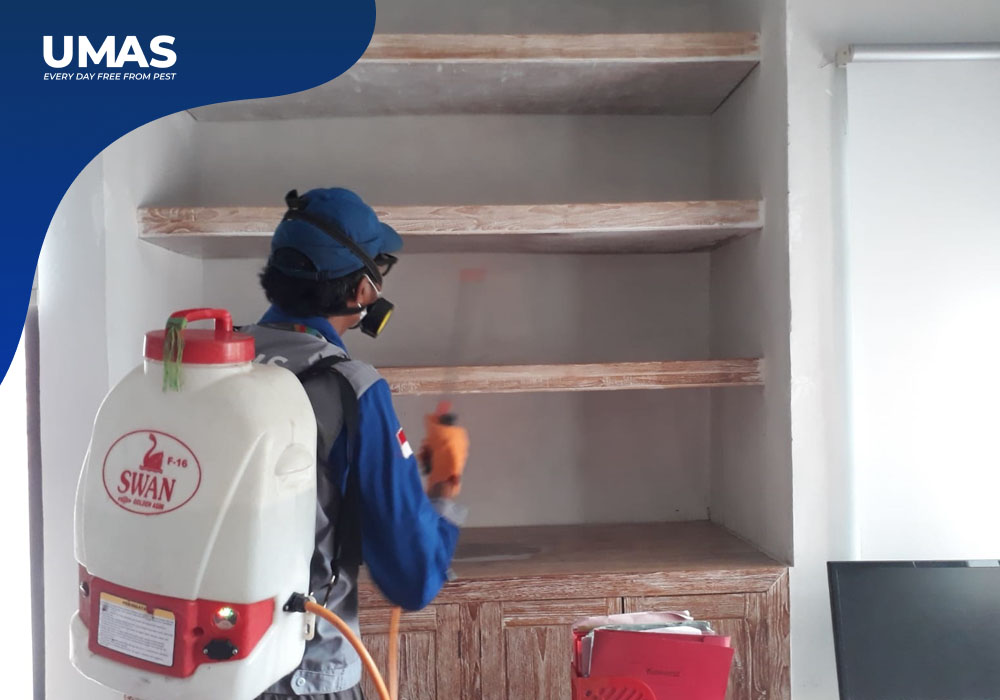
The trench is dug. The rod is inserted. The chemical is injectable. The technician moves sixty centimeters in a row and repeats. This ritual, carried out throughout Greater Jakarta tens of thousand of times per year, is regarded as a technology that has been proven by both homeowners and exterminators. It's not. It's just a matter of tradition disguised as protocol. Subterranean termites are treated as a problem. started in temperate regions that had different soil textures and moisture regimes. Also, the target species varied. The soil is cultivated on Jakarta's silty clay, monsoon precipitation and Coptotermes geostroi's habits of foraging The traditional "trench-and-drench" produces results that vary from transient suppression, to complete futility. Greater Jakarta must have soil treatment protocols calibrated according to the conditions of Greater Jakarta. The following 10 points will help to distinguish chemical applications that merely generates bill lines from treatment that actually eliminates termites.
1. Soil Texture Describes Chemical Mobility
The soil in Jakarta is mostly silty compacted mud. The size of the particles is very tiny. Organic content is minimal. Porosity is not too high. Liquid termiticides formulated for this substrate do not disperse as widely as they do in loamy sands. They gather within the trench, and then move through preferred pathways, cracks and utility trenches, as well as roots channels. Pesticides who believe that they are distributed uniformly are flimsily assuming. Not faith is needed for post-application soil core samples.
2. The 300-500mm Moisture Belt Determines Placement
The roof eaves shelter the soil which is next to the foundation wall. The soil gets very little rainfall. It is much drier that open-air dirt gardens. Termites are active within the belt between 300 to 500 millimeters from the structure. This distance allows them to reach the foundation but they don't receive any water. The belt is not reached by soil treatment installed flush with the wall. Trenching should be performed only at the dripline, not the wall.
3. Hydrolysis half-life measured in weeks not months
Fipronil, imidacloprid, and bifenthrin degrade via hydrolysis. The temperature increases the rate of hydration. Jakarta soil temperatures range from 28 to 32 degrees Celsius on average when digging to a shallow depth. The soil moisture level is higher than 20% for the majority of the wet season. Chemical half-life reduces in relation to. A product labeled for twelve-month efficacy in Ohio has about four months of efficacy in Bekasi. This must be reflected in the guarantee. Most do not.
4. Vertical Barrier Requires horizontal Disruption
Termites can get into the soil through the interface between it and the foundation. Soil treatment creates an invisible chemical barrier if the chemical is present at the contact. Rod injection from the surface deposits chemicals at depth but leaves the top 5-10 centimeters untreated unless the rod is withdrawn gradually during injection, which treats all of the column. Exterminators who pull rods immediately after punching them to depth are only treating the subsoil.
5. C-Organic Binds and Inactivates
Organic soils are able to absorb non-repellent termiticides. This reduces the amount of termiticide that is available for termites. The Jakarta's urban soils tend be low in organic matter, however landscaping planting beds next to foundations are often treated with compost and potting mixes. These zones require more intensive soil treatment to remove the binding effect of organic matter. The label rate assumes the mineral soil is not altered.
6. Pre-treatment Moisture Audits Are Non-Negotiable
The soil's water content greater than 22% could create a preferential habitat. Soil with a content of less than 10% hampers foraging. Exterminators who do not measure the current soil moisture and inject terminicide are using chemicals in undefined conditions. The moisture meter is priced at two hundred thousand rupees. The first time a retreatment is required due to improper conditions of application cost 10 times more.
7. Trench volume must be identical to the label rate, not the linear meter.
Indonesian soil-treatment quotes are usually priced according to the length of the foundation. Label instructions define the volume and concentration per area or per linear meter with specific trench dimensions. Quotes given per meter and don't confirm the depth or width of the trench compliance documents, not treatments. The quantity of chemicals needed for a 15cmx15cm excavation is half that for a deeper 30cmx30cm excavation. Price differentials rarely reflect this.
8. Rodding Versus Trenching: Specifications-Specific Selection
Coptotermes gstroi feeds on the soil within the first 15cm. Microtermes insperatus hunts deeper, accessing the moisture in dry seasons via vertical shafts. Rod injection deposits chemical at depth, intercepting Microtermes. Trenching and mixing deposit chemical across the upper surface to block Coptotermes. Species identification must precede protocol selection. Exterminators who use the same method of soil treatment in every instance are nearly all the time not matched to Jakarta's species range.
9. Re-treatment Intervals Are Shorter Than Marketing Claims
Indonesian market for pest control is very competitive. To increase sales, the warranty duration is now extended. Soil treatment is often protected by three-year warranties. Under Jakarta conditions, field reality supports twelve to 18 months of effective exclusion. This is followed by chemical depletion. Homeowners who notice termites in month twenty-two do not represent an anomaly. They are in line with the schedule. Customers are re-engaged by exterminators who honour warranties from month 22 without arguing about coverage. Exterminators that dispute coverage lose clients.
10. Post-Treatment Soil Sampling Is the only quality assurance that can be verified
The exterminator will claim that the trench was dug properly and the chemical was mixed to the right concentration, and that the injection was performed at the right pressure, distribution was uniform. The homeowner is not provided with any way to verify. The soil cores are analyzed by active ingredient concentration. This is a service that exists. It's inexpensive. Jakarta anti-termite companies that order soil samples from a third party and share their results with customers are distinguishing themselves by proving. Services that refuse samples can be distinguished on the basis of faith. Markets prefer more evidence.
Conclusion
Because they are familiar because of their familiarity, soil treatment procedures in Greater Jakarta continue to be used. It is not the same as a good experience. In order to achieve the same chemical distribution, the city's silty compacted clay requires a bigger trench as compared to loamy soils. The monsoon-influenced climate in the city compresses hydrolysis times which means shorter warranty durations and more regular retreatment cycles. The species assemblage of this region requires a protocol differentiation according to pre-treatment identification. Landscape planting beds need organic carbon adjustments, as well as more frequent application rates. Its foundation geometries need trench placement along the drip line, not wall line. Jakarta anti-termite businesses that provide soil treatments that are based on the labels of their manufacturers for Ohio Texas Osaka or guarantee suboptimal outcomes are a risk. The companies are not accountable for these outcomes; the exterminator who did not modify the procedure to local conditions is responsible. Adaptation involves investment in soil moisture meters sensors for core sampling, laboratory connections as well as technician training in the field of species recognition. These investments are not to be overlooked in a matured market. It is the entry fee which must be taken seriously. Homeowners from Greater Jakarta know the difference between exterminators with this entry charge and those who do not. They can prove this by denying lower offers from the latter and accepting higher ones from exterminators who have paid for the entry fee. See the top anti rayap for more recommendations including membasmi rayap, rayap kayu, bahan lemari anti rayap, pintu anti rayap, rayap rumah, anti rayap, anti rayap untuk kayu, jasa pembasmi hama, bahan lemari anti rayap, jasa anti rayap surabaya and more.
